

Hydrotherapy could help to reduce pain and improve mobility and quality of life for people with the rare genetic condition Hunter syndrome, researchers have found.
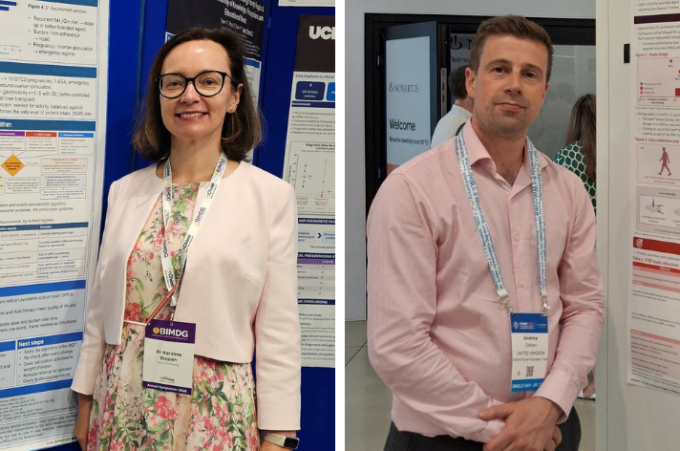
Colleagues at Northern Care Alliance NHS Foundation Trust carried out a study of specialised exercises in warm water supervised by a trained physiotherapist to test the feasibility of the treatment as an add-on to the standard enzyme replacement therapy. Physiotherapist Andrew Oldham and consultant Dr Karolina Stepien led the academic study, supported by the NCA’s metabolic medicine research team. The study was designed by the lead researchers and supported by an academic grant from the MPS Society.
Hunter syndrome (also known as mucopolysaccharidosis II or MPSII) nearly always affects boys and causes symptoms which can include delayed growth, joint and bone abnormalities, and chronic pain as well as breathing and heart problems. These can have a major impact on quality of life.
Walking speed
While enzyme replacement therapy is the gold standard for managing the condition, those affected often continue to have musculoskeletal problems.
Previous research has shown that hydrotherapy in rehabilitation lessens pain and joint stress. In this study, the participants were able to perform exercises, that would have been painful on land, during the weekly sessions over 12 weeks.
Mr Oldham said: “We found that hydrotherapy improved physical performance, specifically how far participants could walk and walking speed, improved muscle strength. They also had less pain and less anxiety about moving. The three patients who were receiving enzyme replacement therapy experienced more improvement than those who weren’t.
“While all participants improved during hydrotherapy, the timing varied – one felt the effects immediately, while others needed several weeks of exercise.”
Dr Stepien added: “This was the first study to specifically assess hydrotherapy in people with MPSII using a crossover design. It was a small study – this is a rare condition and we had to exclude some people because of other symptoms, while others would have struggled to come to Salford Royal to use the specialist hydrotherapy pool. While our results are encouraging, we would like to see further research in larger groups of patients with MPS disorders.”
- The work has been published in the journal JIMD Reports. Andrew Oldham, Nicole Stockton, Mark Warburton, Calvin Heal, Marie Meehan, Karolina Stepien: The impact of hydrotherapy on health-related quality of life, pain and mobility in individuals with mucopolysaccharidosis type II (Hunter syndrome): A pilot feasibility study