

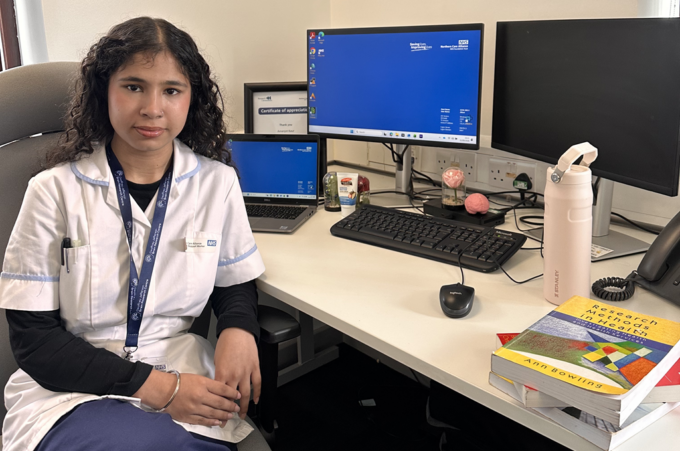
Amanjot Kaur is a biomedical science undergraduate at Manchester Metropolitan University. Here she blogs about her 12-month placement with NCA’s cancer research delivery team.
Stepping into research
During my placement, I worked within the oncology research team as a research support worker, contributing to the delivery of clinical trials through patient recruitment, data collection and study documentation. Through this role, I gained valuable experience and learned far more than I expected at the start of the year.
I mainly worked on the PORTRAIT and POBIG studies, which involve patients diagnosed with glioblastoma, a type of brain cancer. Before MRI appointments, I met with patients to collect blood and tear samples and support them throughout their research visits. Being involved in these studies gave me an insight into how clinical research contributes to improving future patient care and treatment. One of the aspects I enjoyed most about the placement was the opportunity to interact directly with patients. Speaking with them and supporting them during their appointments allowed me to see first-hand how cancer can affect individuals and their families.
Developing new skills
Throughout my placement, I had the opportunity to work across a variety of teams, including the inpatient research team and the NCARC research team. This allowed me to develop a wide range of skills, including venepuncture, blood sample processing and an understanding of clinical research processes. I also completed GCP (Good Clinical Practice) training and the Care Certificate, which strengthened my understanding of clinical research, person-centred care and professional practice. It also gave me the chance to apply the knowledge and practical skills I had gained during my biomedical science degree in a real healthcare setting.
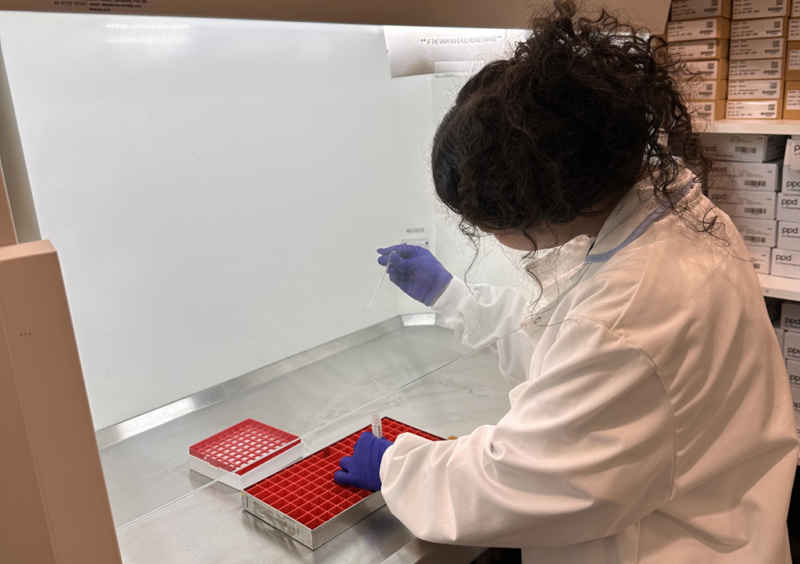
In addition, I had the opportunity to shadow different departments across the hospital, including the phlebotomy team and the pathology laboratory. This provided valuable insight into different healthcare roles and helped me develop a broader understanding of how various services work together to support patient care.
Working alongside research nurses, research practitioners and other healthcare professionals helped me develop strong communication, teamwork and organisational skills. Over time, I became more confident in my abilities, took on greater responsibility and developed a higher level of independence in my day-to-day role.
Advice for future placement students
My advice to future students would be to undertake a placement year and explore the different paths available within healthcare. As a biomedical science student, I initially had a particular career pathway in mind, but my placement showed me how many opportunities exist beyond what we learn about at university. A placement year provides valuable insight into the realities of working in a professional environment. It helped me build confidence and gain a better understanding of the areas I enjoy most, which will help guide my future career decisions.