

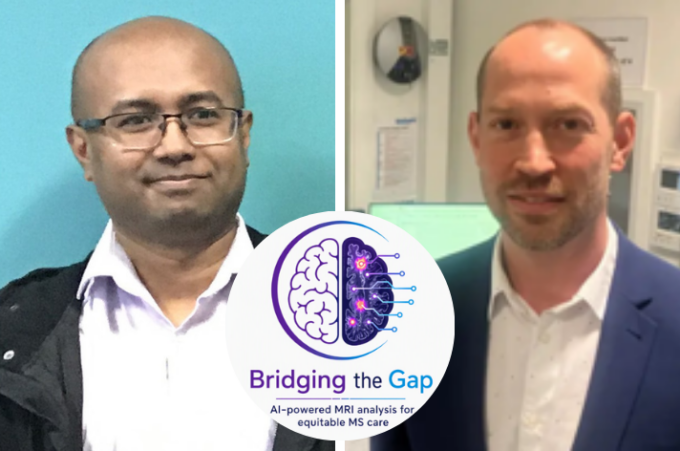
Researchers have been awarded £600,000 to develop an AI tool for faster multiple sclerosis diagnosis and monitoring.
More than 130,000 people in the UK live with multiple sclerosis (MS). MRI is central to their diagnosis and care — yet almost all NHS centres face long delays, because there are too few specialist neuroradiologists to report scans quickly and consistently.
A team from The University of Manchester, Northern Care Alliance NHS Foundation Trust and industry partner AINOSTICS has been awarded £600,000 from the National Institute for Health and Care Research (NIHR) Invention for Innovation programme to develop and validate an AI tool that will help radiologists report MRI scans quicker, so that people with MS can be diagnosed faster. The project aims to address growing pressures on NHS radiology services by automating the analysis of MRI scans, enabling faster and more consistent assessment of disease activity.
Fast and accurate
The proposed AI platform, AIMS-NHS, has been developed to identify and quantify MS lesions, detect key imaging biomarkers, and monitor changes in the brain over time – all within minutes. This AI tool will apply the latest MS diagnostic criteria to help clinicians make a faster and more accurate diagnosis. The team, led by Dr Joyutpal Das (above left), consultant neurologist at Salford Royal, will validate the technology using real-world NHS data from a diverse group of people with MS.
A major focus of the research is improving equity in healthcare. Dr Nils Muhlert (above right), lead co-investigator from The University of Manchester said: “By providing high-quality MRI interpretation regardless of location, the technology could help reduce variation in access to specialist expertise and support earlier diagnosis and treatment for people living with MS.”
The project will also evaluate the tool’s usability in clinical practice, cost-effectiveness for the NHS, and potential to support future diagnostic pathways.
Partnership working
The team are working with The MS Trust alongside PPIE representatives including from Positive About MS. This means people with MS will be involved throughout the project, from designing the research to sharing the results.
Ruth Stross, director of services and health professional lead at The MS Trust, said: “Partnerships between charities, the NHS, people with MS and researchers are essential if we are to tackle the challenges facing MS services and improve outcomes for people living with the disease. We are proud to be supporting this NIHR-funded project, helping to ensure that the voices and experiences of people with MS inform the development of AI technology that could reduce variation in care, support earlier diagnosis and help clinicians make the best use of increasingly stretched healthcare resources.”
This technology aims to help transform MS care across the NHS, improve patient outcomes while reducing pressure on overstretched radiology services.
This project is supported by the Geoffrey Jefferson Brain Research Centre, which brings together researchers, clinicians and patient partners to advance brain health research and improve outcomes for people affected by neurological conditions.