

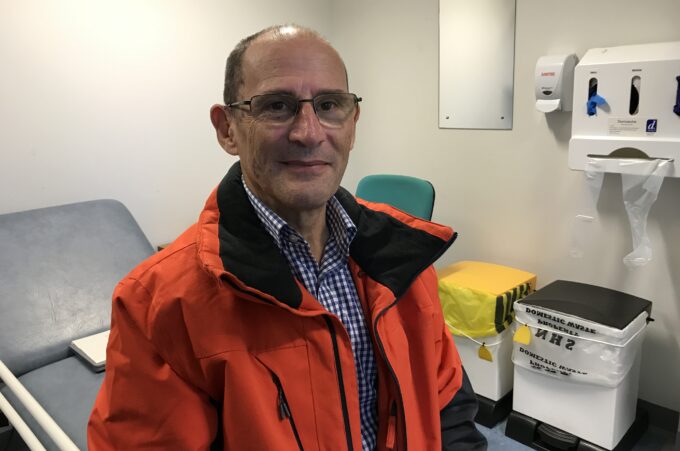
Like most research participants, scientist and kidney patient Howard Cranmer-Gordon sees taking part in studies as a way of giving back to those who went before.
He says he’s in awe of those who were the first to try treatments and medications that eventually became the standard treatments of today.
But he goes further than most in his involvement – and his latest efforts are helping to make kidney research more responsive to patients’ needs by breaking down the barriers to taking part.
Howard uses his experience of kidney disease to help shape and advise on future research through the Donal O’Donoghue Renal Research Centre’s patient and public involvement and engagement group.
And as a patient ambassador, he’s interviewed more than 20 other kidney patients for a key study that seeks to understand and overcome barriers to taking part in kidney research among people from under-served communities.
Health inequalities
The study, part of NCA Research & Innovation’s focus on tackling health inequalities, is led by Prof Phil Kalra, our R&I Director who has been Howard’s renal specialist for almost 20 years. It saw Howard spend at least an hour each with renal patients from different ethnic backgrounds. He explained: “We were trying to work out what cultural and religious aspects were putting people off research – a lot had been asked to take part previously but hadn’t been interested.
“I got the impression a lot of people were more prepared to open up about the problems they had to a fellow patient. I felt they were telling me things they wouldn’t have told a medical professional”
He lives more than 30 miles away from Salford Royal and gave up a lot of his own time to undertake the interviews, something that was much appreciated by the renal research team, who said he was an absolute pleasure to work alongside.
Howard, who has a PhD in nuclear physics, was diagnosed with the relatively rare condition IgA nephropathy (IGAN) in 2013. It happens when antibodies build up in the kidneys and cause damage to the glomeruli (small filters inside the kidneys).
Looking to future
IGAN affects a relatively small number of people and can take many years to progress, so the study of IGAN patients and the development of medication specifically for IGAN has been a slow process. “I decided that joining kidney research projects would be a fitting way to repay the debt to those who trialled the medicines I take and, hopefully, it will help other patients in the future,” he said.
“Taking part in research projects often doesn’t require much more effort than signing a consent form and allowing the researchers to have access to blood and urine samples and routine test results. Some projects may also involve scans or the testing of new medicines.
“I have always been very well looked after during trials and you are often monitored more closely than usual, which can’t be a bad thing. The researchers are often keen to pass on their knowledge about chronic kidney disease (CKD) and you can learn a lot about your particular type of CKD through talking to them.
“I encourage all patients to try participation in research trials. It’s a great way to do our part to repay the efforts of those who have enabled the development of existing treatments, and to assist researchers to find cures for those of us with CKD now, and in the future.”